
You want a backyard shed for your garden tools and a few stray bags of potting soil. Simple enough, right?
Until you get on Google and start looking. Suddenly, it's anything but simple.
Dozens of options. Prices all over the place. Plastic sheds on Amazon promising you the sun, moon, and stars. Wood sheds that look amazing—but cost more.
So what gives? Is a wood shed really worth the higher price tag? Or is plastic good enough for your storage needs?
At Weaver Barns, we’ve been building sheds for years, and we have a few thoughts to put out there on the matter of choosing the right materials for your storage shed.
Let’s break it down by looking at a few things you want to consider when thinking about plastic vs wood sheds.
Table of Contents








1. Durability: Will it survive the weather?
Sheds live outside 24/7, facing rain, snow, heat, and cold—so durability matters.
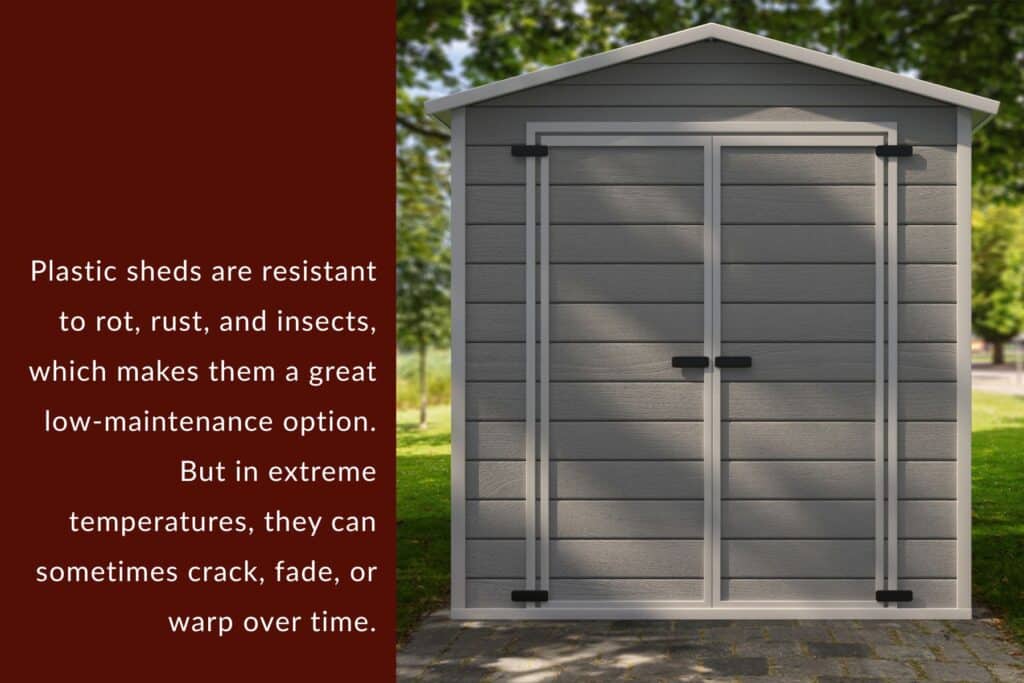
Plastic sheds are resistant to rot, rust, and insects, which makes them a great low-maintenance option. But in extreme temperatures, they can sometimes crack, fade, or warp over time.
Wood sheds are naturally strong and, when properly built and maintained, can stand up to tough weather—think snowstorms, wind, and heavy rain. In general, they tend to be more durable than plastic sheds. That said, they do require upkeep to prevent issues like rot or pest damage.
2. Maintenance: How much work are we talking?
Some people are homebodies who love puttering around taking care of their property. Other people just want their property to function and don’t get a big kick out of maintaining it. Your “homeowner personality” could affect your shed choice.
So how about plastic vs wood sheds when it comes to maintenance?
Plastic sheds are low maintenance. They’ll never need painting or staining. But once they fade or crack? You can’t fix that. You just live with it or replace it. So we’re talking no maintenance, but also no hope for repairing the problems that surface.
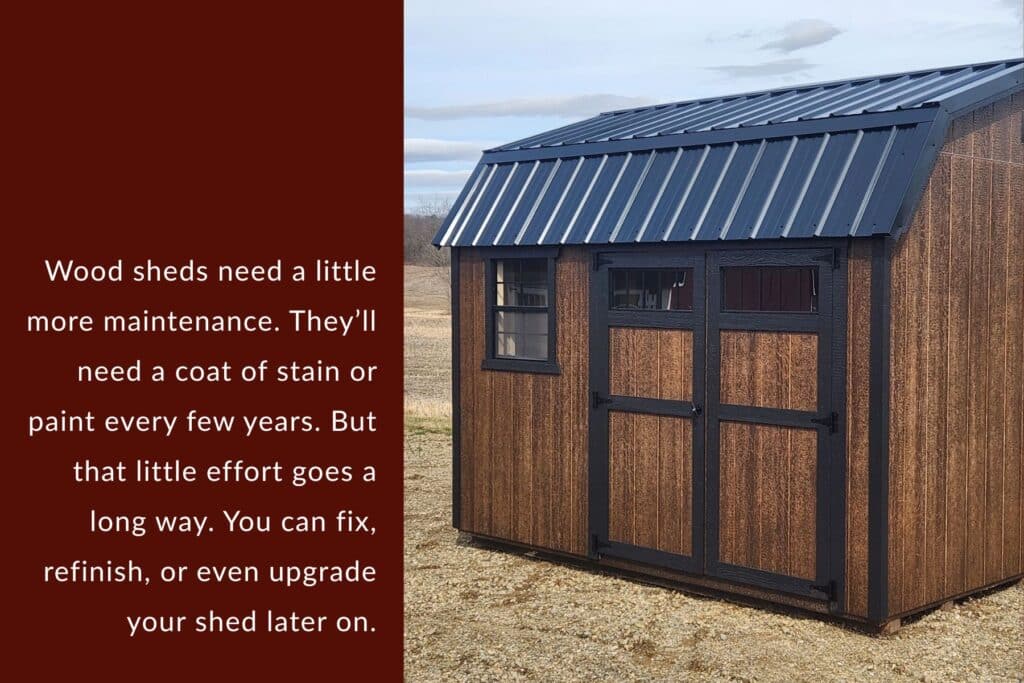
Wood sheds need a little more maintenance. They’ll need a coat of stain or paint every few years. But that little effort goes a long way. You can fix, refinish, or even upgrade your shed later on.
So maybe plastic is “set it and forget it” for today. But the downside is less flexibility in the long run.
Wood, on the other hand, is fixable, flexible, and future-proof.
3. Cost: What are you really paying for?
Yes, plastic sheds are cheaper upfront. That’s their main selling point. And if low initial cost is what you want, plastic may be your friend.
But cheap comes with a long-term cost.
You might save a few hundred bucks today. But in five years? You could be dealing with cracks, leaks, or needing a whole new shed.
A quality wood shed is an investment. One that can last 20+ years, or even longer with proper care.
Everybody knows that you generally get what you pay for. Like with shoes: a $20 pair of faux leather slip-ons might last you a summer. A $125 pair of real leather Birkenstocks might last you 20 years.
It’s the same way with shed materials—investing in quality materials ultimately saves you money in the long run.
Aesthetics: Do you want it to look good?
Let’s be honest. A shed is part of your yard—the yard you host in, relax in, and look at through your window.
Therefore, you probably want your shed to add charm to your yard and not be an eyesore.
The truth is that both wood and plastic sheds can fall on either end of the spectrum. Both can be ugly or beautiful.
However, when it comes to plastic vs wood sheds, we think wood wins the charm contest. You just can’t beat the appeal of real, authentic wood.
The other perk to wood is the flexibility to change things around if you want to. When you buy plastic, you commit to the color you choose. Wood is customizable with paint or stain.
However, wood doesn’t always look perfect. Wood does start looking rundown and dilapidated if it’s not maintained. Peeling paint, fading wood, splintery doors–you know the look. So while wood does win the charm contest, it doesn’t come without a price.
Installation: What does setup involve?
Plastic sheds are usually lighter and come in kits, which makes them a popular choice for DIYers. If you’re handy and have a few basic tools, you can likely put one together in a day or two.
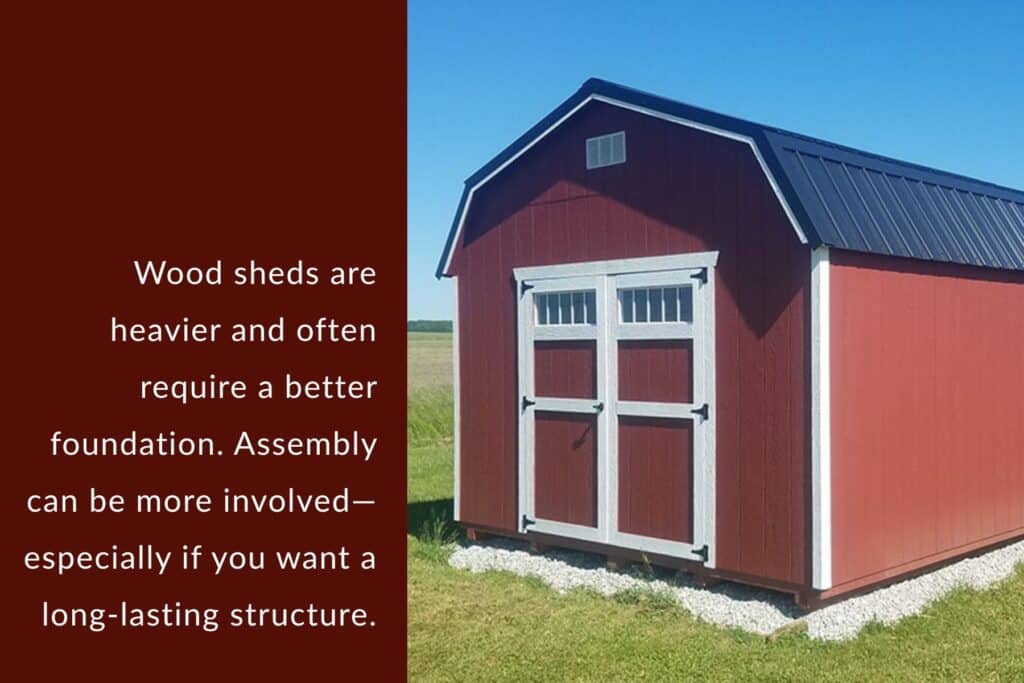
Wood sheds are heavier and often require a better foundation. Assembly can be more involved—especially if you want a long-lasting structure.
Many homeowners choose to have them professionally installed to get the job done right.
Bottom line? Plastic sheds are quicker to assemble and more DIY-able, but wood sheds offer more customization and strength if you're willing to put in the time (or call in the pros).
Environmental Impact: What’s it made of?
These days there are lots of people who care about the environmental impact of their purchases. Maybe that’s you too.
Plastic is... plastic. It’s made from petroleum. It doesn’t break down. And most of it ends up in landfills when you're done with it.
Wood is renewable. Sustainable. Recyclable. And when it’s sourced responsibly, it’s a shed material you can feel good about.
Strength & Security: Can it handle real storage?
Need to hang shelves? Store heavy tools? Keep things safe from wind and animals?
Plastic sheds can be sturdy, but they are limited when it comes to building in your own customized storage solutions. For instance, what if you decide you want to grab some scrap wood and add shelving? Or a loft in the back? Or hooks on the walls to hang your sports equipment?
Wood sheds are built like small homes. Solid framing. Real roofing. Lockable doors. They can handle heavy storage, snow loads, even electrical wiring if needed (imagine illuminating those dark corners and actually finding your long-lost tennis racket!!!)
Wondering what size you want your shed to be? Here’s a guide to choosing the perfect size storage shed for your needs.
Longevity: How long will it last?
Nobody wants to go to the trouble of buying and installing a new shed every few years. So which type of shed is most likely to hold up and stick around?
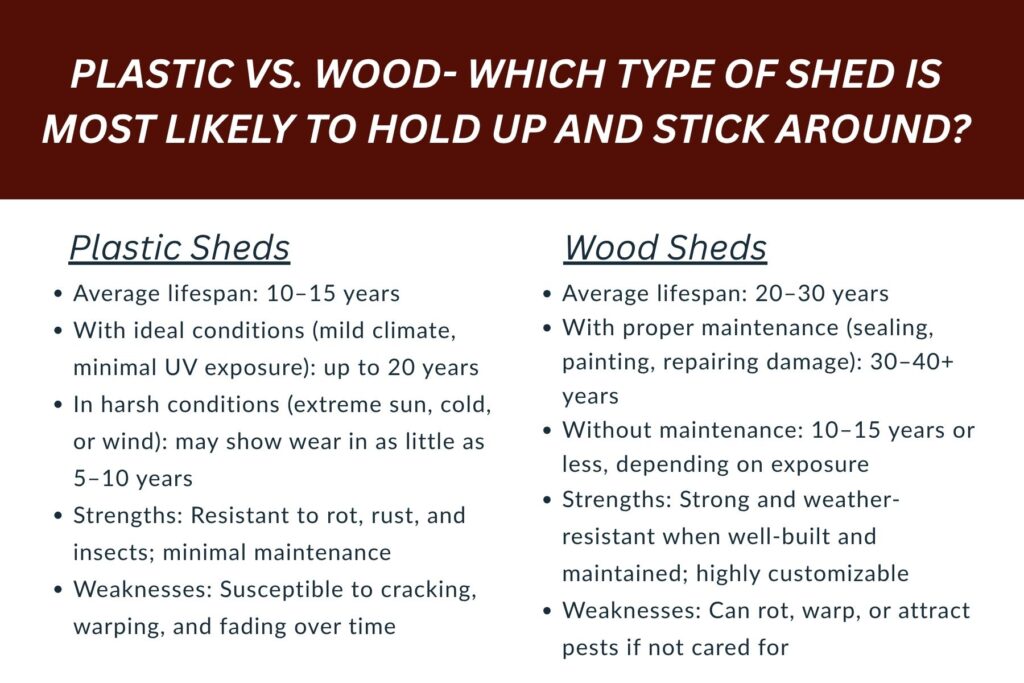
Plastic Sheds
- Average lifespan: 10–15 years
- With ideal conditions (mild climate, minimal UV exposure): up to 20 years
- In harsh conditions (extreme sun, cold, or wind): may show wear in as little as 5–10 years
- Strengths: Resistant to rot, rust, and insects; minimal maintenance
- Weaknesses: Susceptible to cracking, warping, and fading over time
Wood Sheds
- Average lifespan: 20–30 years
- With proper maintenance (sealing, painting, repairing damage): 30–40+ years
- Without maintenance: 10–15 years or less, depending on exposure
- Strengths: Strong and weather-resistant when well-built and maintained; highly customizable
- Weaknesses: Can rot, warp, or attract pests if not cared for
So overall:
Plastic is lower maintenance but may not last as long, especially in tough climates.
Wood requires upkeep but has the potential to last twice as long—or longer.
Our Take
So... plastic vs wood shed? Here’s our take on the matter:
- Plastic sheds are cheap and easy. But they don’t age well.
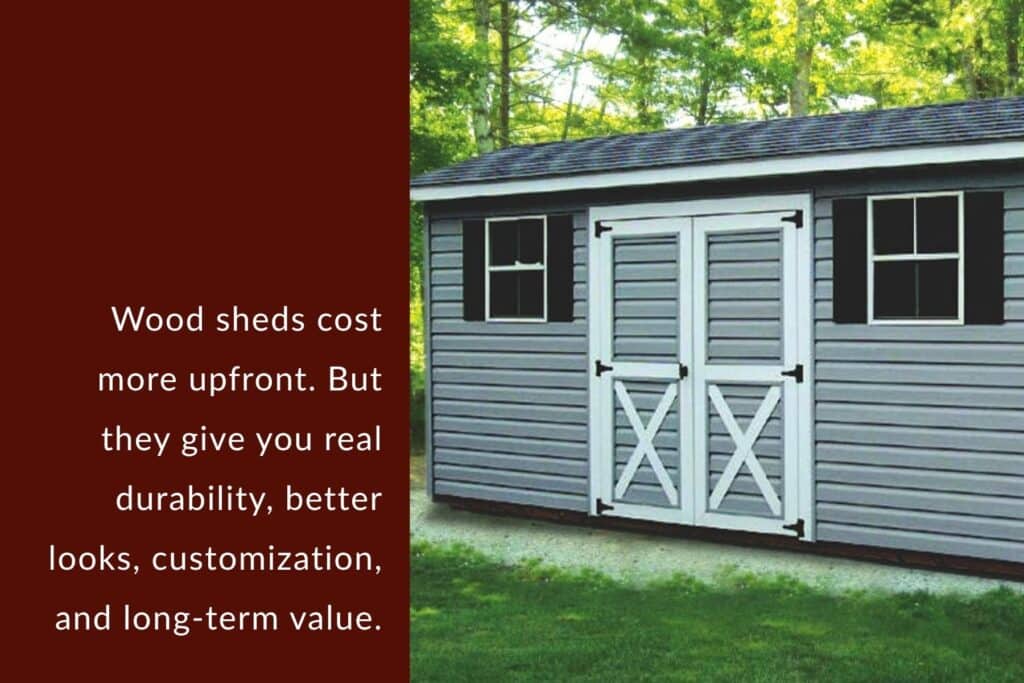
- Wood sheds cost more upfront. But they give you:
- Real durability
- Better looks
- Customization
- Long-term value
A quality shed is a lifetime investment. Make sure you go with a good one!
At Weaver Barns, we build wood sheds that stand the test of time. And we help you choose the one that fits your style, your space, and your budget.
Because your shed should be more than just storage.
It should be something you're proud of.
Ready to explore your options? Check out our collections at Weaver Barns.
