
Working from home has become the new normal for many. But let’s be honest—balancing conference calls at the kitchen table or typing away on the couch isn’t always ideal. Noise, clutter, and constant interruptions make it hard to focus.
Here’s the good news: you can convert a backyard shed into a home office. With the right planning, even a simple garden shed can become a comfortable, private, and fully functional workspace.
Luckily, Weaver Barns can get you started! Our premium storage sheds are the perfect basis for a home office structure. We’ll walk you step by step through the process of converting a shed into a home office, covering everything from planning and permits to insulation, utilities, and design.









Not enough time to read? How about a TL:DR?
- Converting a shed into a home office offers a dedicated workspace, increased productivity, cost savings, and adds property value.
- Before starting, consider planning, permits, and zoning laws, and contact your local building department and HOA.
- Insulation and climate control are crucial for comfort, with options like fiberglass, foam boards, and mini-split systems.
- Ensure proper lighting (natural and artificial) and electricity, and design the space for functionality and personal comfort.
Why a Shed Office?
Before diving into the details, let’s talk about why this option makes sense for so many homeowners.
A shed office offers:
- Separation from home life – The physical boundary of walking outside to your workspace helps you mentally “clock in” and “clock out,” but without the hassle of dealing with the daily commute to the office, which in itself is a time sink.
- Increased productivity – unfortunately, some of the hazards of working from home are distractions from family, pets, or household chores. By separating yourself from the house, even for a few dozen feet, you can stay focused on your tasks.
- Cost savings – A shed office is often cheaper than building an addition or renting office space.
- Flexibility – Today it’s an office, tomorrow it could be a studio, gym, or guest house. Remote work is a way for workers to address work-life balance, stress, and costs on their own terms.
- Property value – A finished outbuilding can add resale appeal for future buyers.
Think of it as creating a personal sanctuary—close enough to home for convenience but far enough away to stay focused.
Planning & Budgeting
Before picking out paint colors or ordering a desk, start with the basics: planning and budgeting.
Here are some key questions to ask yourself:
- What will you use the space for? Strictly an office? Or will it also double as storage, a guest house, or a hobby room? (Just bear in mind that an office/hobby room combo requires you to have self-discipline to maintain that work-life balance!)
- What’s your budget? Will you be converting an existing shed or purchasing a new one? Buying a shed is more expensive, of course, but you have the benefit of a completely new structure to start with. You also need to determine whether you do a DIY update or a complete professional remodel. It’s definitely cheaper to DIY, but before you break out the measuring tape, ask yourself: what’s your time worth? What if a major project falls into your lap while you’re fitting out your shed, or if a challenging aspect of the build slows you down? Will you have the time and energy to work on the shed when you’re not at work? Finally, with a new shed, you’ll also need to deal with the red tape of permits and zoning laws.
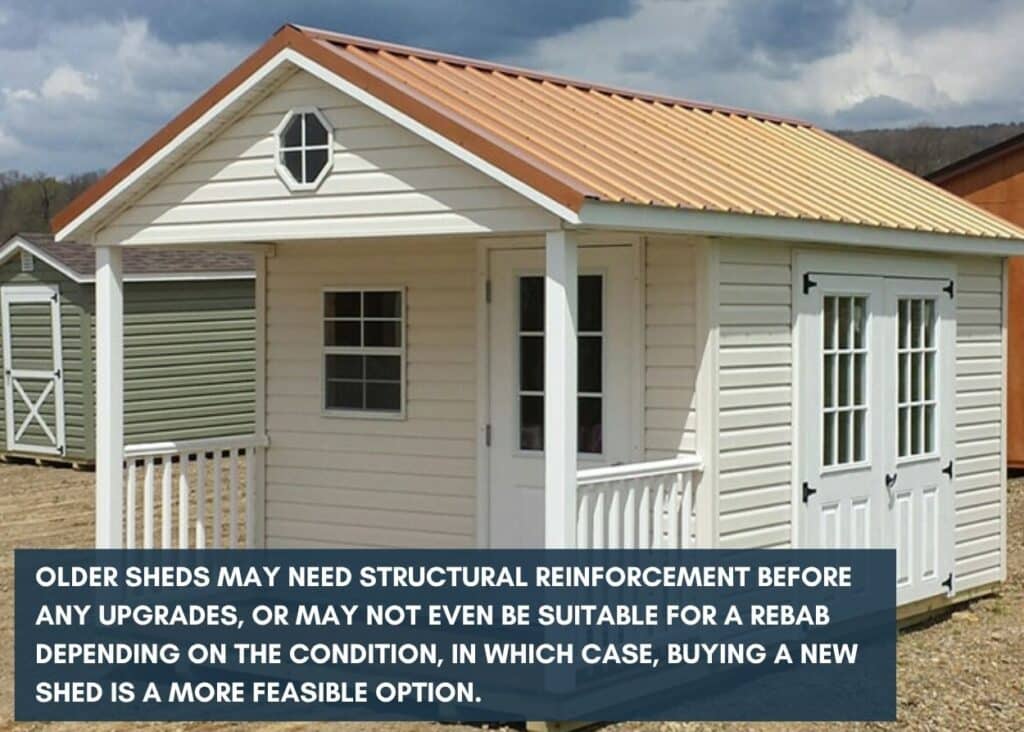
- If you’re converting your existing shed, what condition is the shed in? Older sheds may need structural reinforcement before any upgrades, or may not even be suitable for a rebab depending on the condition, in which case, buying a new shed is a more feasible option (luckily, you’re talking to just the right people if you need a new shed!).
Permits & Zoning
Excited about building your own Fortress of Solitude in your backyard? Great! However, you’ll have to contend with every builder’s kryptonite: the building permit. Every city or county has its own rules for outbuildings. Common considerations include:
- Zoning laws – Some municipalities or neighborhood HOAs may restrict sheds from being used as living or office space.
- Setbacks – Buildings often must be a certain distance from property lines.
- Permits for utilities – Electrical wiring, plumbing, and HVAC usually require inspections.
- Exterior modifications – Adding windows, doors, or decks may require approval.
Hot tip: A quick call to your local building department and neighborhood HOA (if you have one) can save you time and headaches down the road. The permit authorities don’t believe in asking forgiveness instead of permission, so make sure you have your paperwork ready before you break ground!
Insulation & Climate Control

An unfinished shed is basically a box exposed to the weather. Without insulation and climate control, you’ll be sweating in July and freezing in January. Here’s what you’ll need to be comfortable in your office shed:
Insulation Options:
- Fiberglass batts & blankets: Budget-friendly and easy to install, making them ideal for DIY projects. Note that they are not moisture resistant, and can be challenging to fit into tight spots.
- Loose-fill insulation: Great for filling small or hard-to-reach spaces, loose-fill can also be fire-resistant. However, it can settle over time, reducing its effectiveness, and you’ll need an insulation blowing machine.
- Rigid foam boards: Durable, moisture-resistant, great for walls and floors. Installation requires a steady hand and a knife to cut the board to the desired shape. Measure twice, cut once!
- Spray foam: The most expensive option, spray foam provides excellent air sealing. Like loose-fill, a spray foam requires some specialized equipment.
For more information about these four insulation options, check out this blog. It’s written for pole barns, but the fundamentals remain the same.
Heating & Cooling Options:
- Mini-split systems – Heat and cool efficiently with a sleek wall unit. These units are highly popular for quickly and efficiently heating and cooling small spaces, making them ideal for storage shed conversions.
- Portable AC/heater combos – Great for small sheds without heavy electrical upgrades.
- Radiant floor heating – A luxurious but pricier option, this complex heating system is perfect if you’re doing a complete remodel.
Ventilation
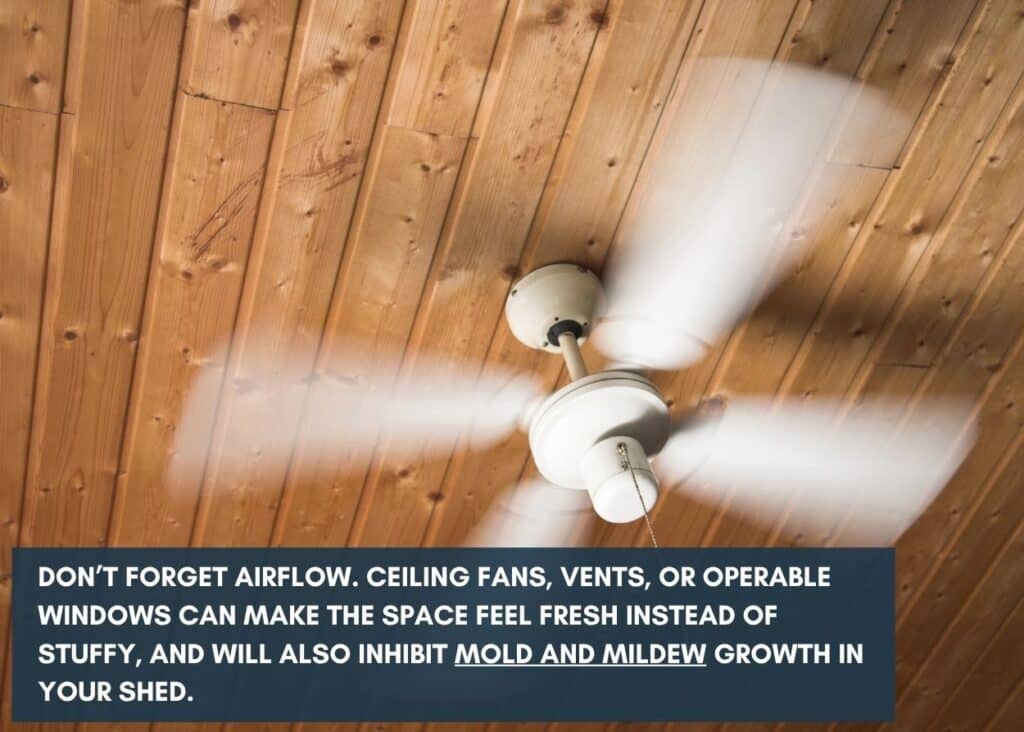
Don’t forget airflow. Ceiling fans, vents, or operable windows can make the space feel fresh instead of stuffy, and will also inhibit mold and mildew growth in your shed.
Rule of thumb: If you wouldn’t spend a whole winter day or summer afternoon in the shed, it’s not ready to be an office.
Lighting & Electricity
Now let’s talk power. Without electricity, your shed is just a fancy reading nook.
Electricity Essentials
- Power: You’ll need electricity. The obvious answer is to run an electrical line to your shed. Alternatively, solar panels with a battery bank are ideal for small building projects such as a storage shed conversion. Make sure you hire a licensed electrician to do the work!
- Outlets: Plan for laptops, monitors, chargers, printers, and extras like coffee makers. Combination outlets that contain USB ports will save space and the hassle of having to move USB chargers about.
- Lighting: Combine overhead fixtures with task lighting on your desk. LED lighting is affordable, efficient, reliable, and customizable to meet your specific lighting needs.
- Internet: Options include Wi-Fi extenders, powerline adapters, or running an Ethernet cable.
Natural Light
Nothing beats daylight for productivity and mood. A shed office without windows is pretty much like working in a broom closet. Consider:
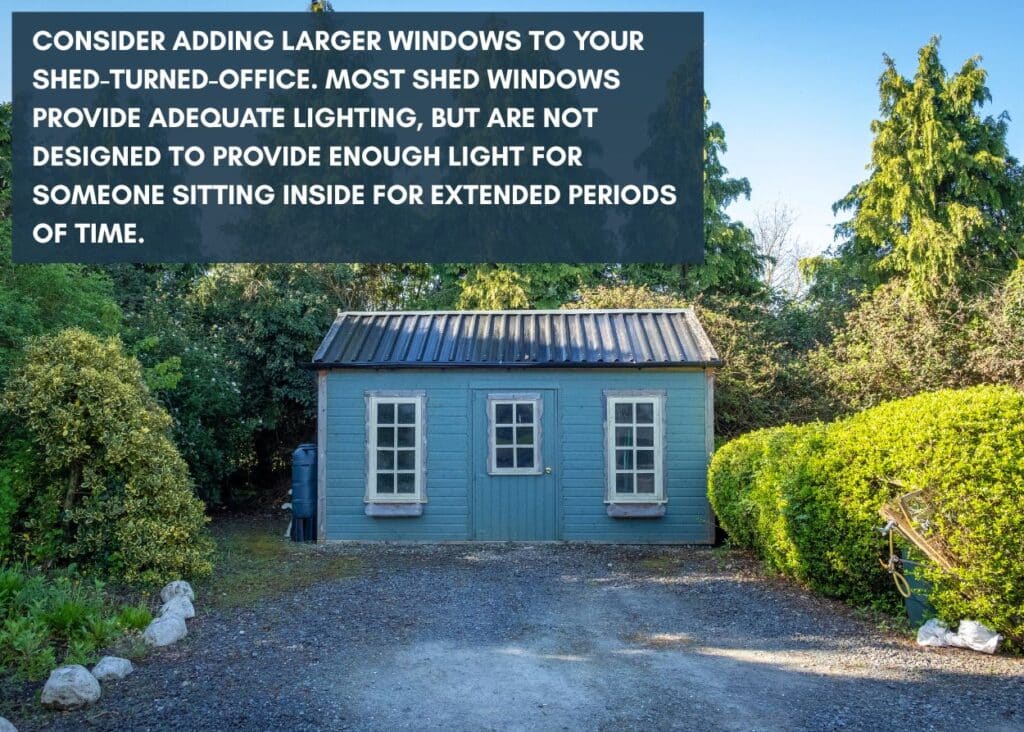
- Adding larger windows. Most shed windows provide adequate lighting, but are not designed to provide enough light for someone sitting inside for extended periods of time.
- Installing a skylight to allow maximum sunlight coverage in your office (make sure it’s sealed tight against the elements!)
- Swapping the solid shed door for a glass-paneled one. It lets in plenty of light and has a premium look.
Pro tip: Hire a licensed electrician for wiring. It’s safer, and you’ll likely need it for permits anyway.
Design & Furnishing Tips
Here’s the fun part—making the space your own.
Layout Ideas
The key to a successful work-from-home environment is making it feel like a living space as well. Look for ways to live in your home office, not just to work.
- Desk near natural light – Position your workspace near a window for optimal lighting.
- Use vertical space – Wall shelving, pegboards, and wall-mounted cabinets save floor space.
- Zoning – Divide space into work and storage areas if needed.
Furniture & Style
It’s a small space that can get cluttered easily. Look for space-saving solutions:
- Choose ergonomic chairs and desks.
- Consider compact or fold-down furniture for smaller sheds.
- Add rugs, curtains, or acoustic panels to soften sound.
Personal Touches
Just because you’re in a home office doesn’t mean it needs to look like an office. Personalize your space to give it a sense of fun and functionality:
- Paint walls in light, calming colors.
- Hang art or motivational quotes.
- Add plants for greenery and air quality. However, keep in mind that some plants can be toxic to pets, should you decide to have a furry coworker about.
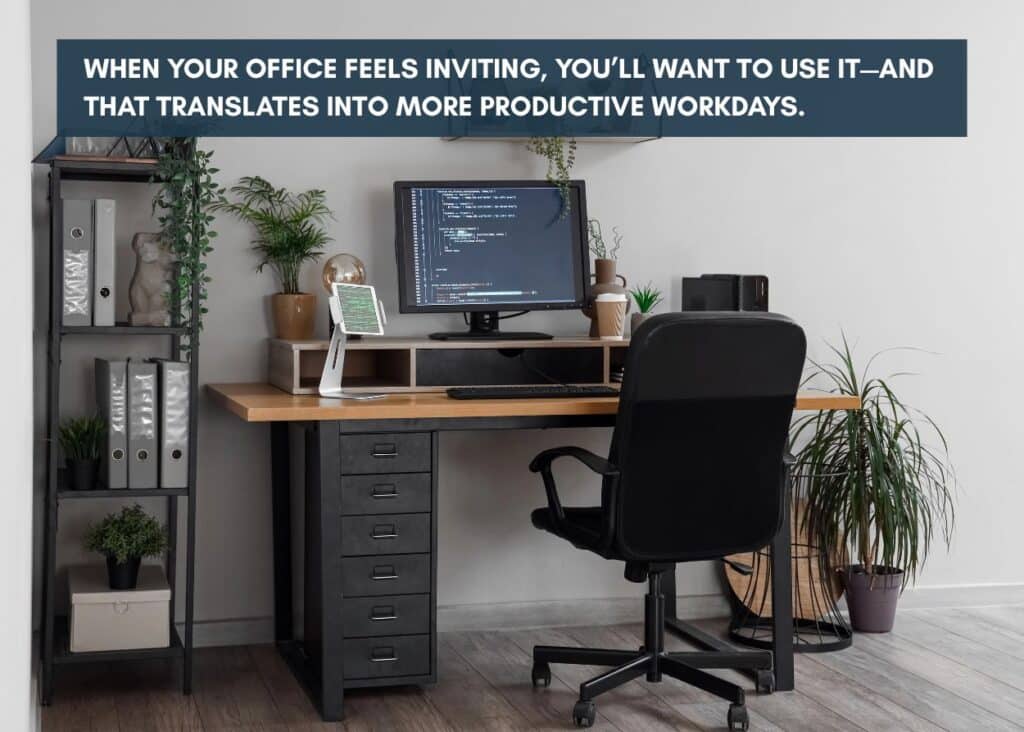
When your office feels inviting, you’ll want to use it—and that translates into more productive workdays.
Flooring Options for Comfort & Style
Your shed’s floor likely wasn’t designed for office use. Upgrade it for both comfort and style:
- Vinyl planks – Durable, water-resistant, budget-friendly.
- Laminate flooring – Affordable and comes in a variety of finishes.
- Carpet tiles – Add warmth and help with soundproofing.
- Engineered wood – Higher-end look with solid durability.
Adding a rug can also make the space cozier while absorbing sound.
Soundproofing for Focus
If you’re on calls all day or need quiet for deep work, soundproofing is a worthwhile investment.
Options include:
- Acoustic wall panels
- Weatherstripping around doors and windows
- Rugs and curtains to dampen echoes
- Insulated drywall
- White noise generators
It’s not about making the shed silent, but about reducing distractions so you can concentrate more effectively.
Security Considerations
Since your shed office may house valuable electronics, think about safety.
- Install sturdy locks on doors and windows.
- Add motion-sensor lights outside.
- Consider a security camera or smart alarm system.
This way, you can step away from your office with peace of mind.
Get Back to Work!
A shed-to-office conversion is one of the smartest ways to create a dedicated workspace at home. It’s private, practical, and tailored to your budget and style.
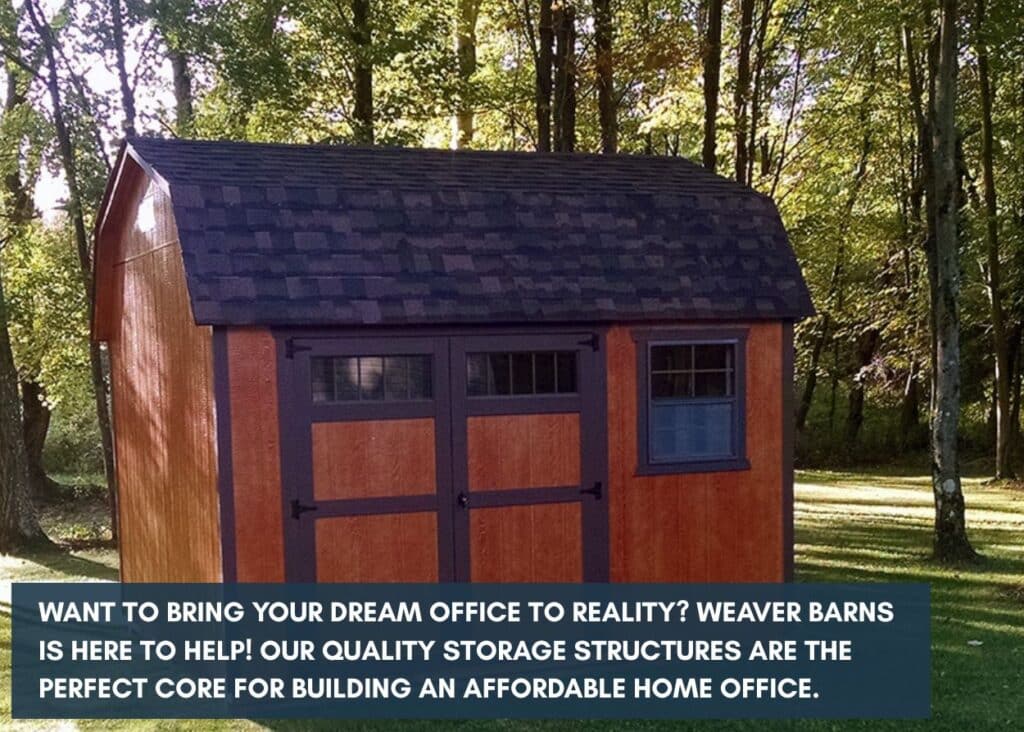
And to bring your dream office to reality? Weaver Barns is here to help!
Our quality storage structures are the perfect core for building an affordable home office. With the right planning and creativity, you’ll gain not just a workspace—but a better work-life balance.
Contact us today to get started on your new office—we serve much of the Northeastern Ohio and Northwestern Pennsylvania region!
