
You need to clean up that mess of leaves, so you head into the garage to grab the leaf blower. Instead, you find a wall of bins, a bike with a flat tire, and three boxes you forgot you owned.
When your stuff starts spilling out of the garage and into the yard, a backyard shed is usually the answer. And one size keeps coming up for good reason: the 10x16 shed. It's roomy enough to be genuinely useful, but not so big that it eats your whole lawn.
At Weaver Barns, we’re not content to just sell sheds. We want to sell quality sheds, the kind that people are surprised to find out how well-built they are, and to discover that we really do care that their storage needs are taken care of. Sure, we sell 10x16 sheds, but is that the right size for you? Let’s find out,
So let's walk through what a 10x16 shed actually holds, what people use one for, and the few things worth sorting out before you buy. By the end, you'll know if this is your size.
Table of Contents



TL;DR: How to tell if a 10x16 shed is right for you
- A 10x16 shed provides 160 square feet, offering a versatile balance between storage capacity and yard footprint.
- It is suitable for various uses, including lawn equipment storage, workshops, home offices, or hobby studios.
- Customization options such as windows, lofts, and electrical upgrades allow the shed to adapt to long-term needs.
- The size serves as an ideal middle-ground option compared to smaller or larger shed alternatives.
- Before purchasing, confirm site preparation requirements, zoning permits, and any applicable HOA guidelines.
So How Big Is a 10x16 Shed, Really?
A 10x16 shed gives you 160 square feet of floor space. It’s a pretty decent-sized space, but since numbers on a page can be hard to picture, it's about the footprint of a standard parking space. It's also bigger than many small bedrooms.
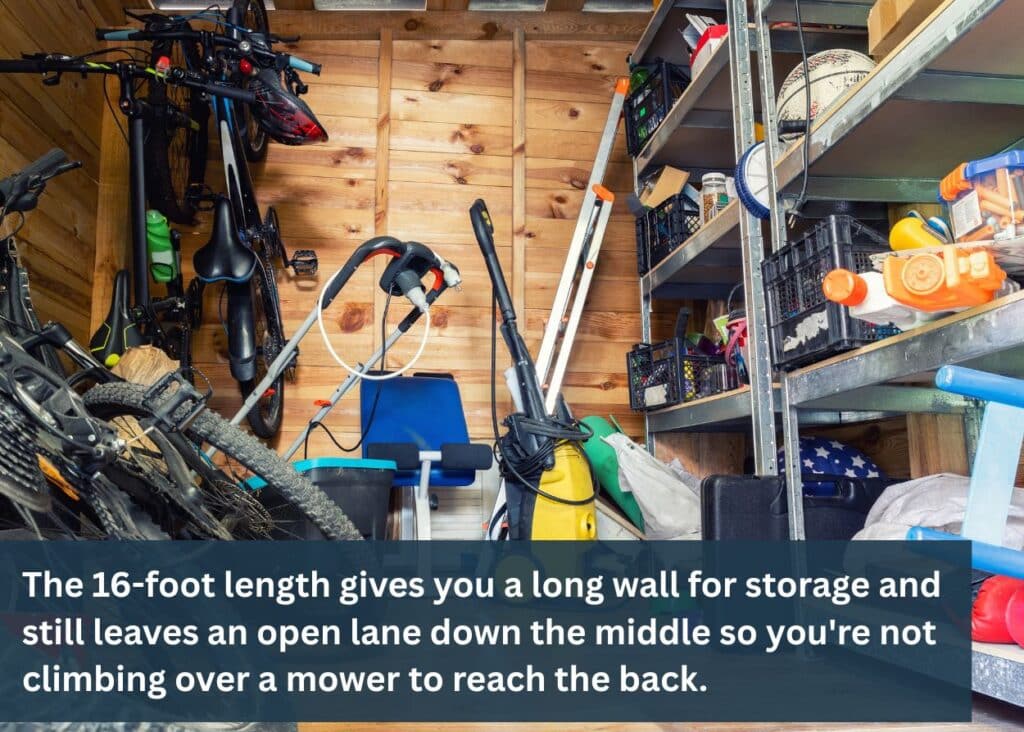
That floor holds more than most folks expect. Inside a 10x16, you've got room for:
- A riding mower, with space left over to walk around it
- A workbench along one wall
- Shelving for totes, tools, and holiday decorations
- Bikes, a wheelbarrow, and the rest of your lawn gear
- Patio furniture safely parked for the off-season
The 16-foot length is what makes storing stuff in this shed a breeze. It gives you a long wall for storage and still leaves an open lane down the middle, so you're not climbing over a mower to reach the back. That mix of depth and walking room is what makes the size so handy.
What Folks Actually Do With 160 Square Feet
A 10x16 isn't just for rakes and paint cans. Because it has real, usable space, people get to be creative with it. Here are the most popular uses we’ve seen:
- Overflow storage. “I’ll deal with it later” is the often-overheard mantra when it comes to overflow storage. It’s the classic move of moving the holiday bins, the camping gear, and other piles of procrastinated stuff out of the house and garage.
- Lawn and garden headquarters. Mower, trimmer, mulch bags, and hand tools, all parked in one convenient spot near the yard where you use them.
- A workshop. Set up a bench, hang a pegboard, and you've got a real place to build, repair, and tinker without taking over the kitchen table.
- A she-shed or home office. Add a window or two and some power, and 160 square feet becomes a quiet room away from the distractions of home, no commute required.
- A hobby studio. Pottery, woodworking, painting, model building, you name it. A dedicated space means you can leave a project out and come back to it.
- A toy garage. ATVs, dirt bikes, kayaks, and golf carts need a home too, and they'd rather not sit out in the weather.
Or even combine several. Store your lawn and garden tools on one end, and your workbench on the other. One size, many jobs: A 10x16 can change roles as your life changes.
Making It Work for You
No two sheds are alike. The shell may be the same 10x16, but what you add to it is what makes it yours. Here are some upgrades worth weighing before the build:
- Doors. A single door is fine for foot traffic, but if you're rolling in a mower or an ATV, ask for a wider double door and add a ramp. Trying to wrestle equipment through a narrow opening gets old fast.
- Windows. Natural light makes a shed feel less like a cave. Worth it for workshops, offices, and anywhere you'll spend real time.
- A loft. A loft uses the space above your head, which is perfect for light, bulky items like totes, sleeping bags, and seasonal decor.
- Shelving and a workbench. Built-in storage keeps the floor clear, so you can actually move around inside.
- Insulation and electrical. Planning to use the shed year-round? Power and insulation turn a storage box into a comfortable room you'll want to be in. This is especially important if you intend to use the shed as an office or she-shed.
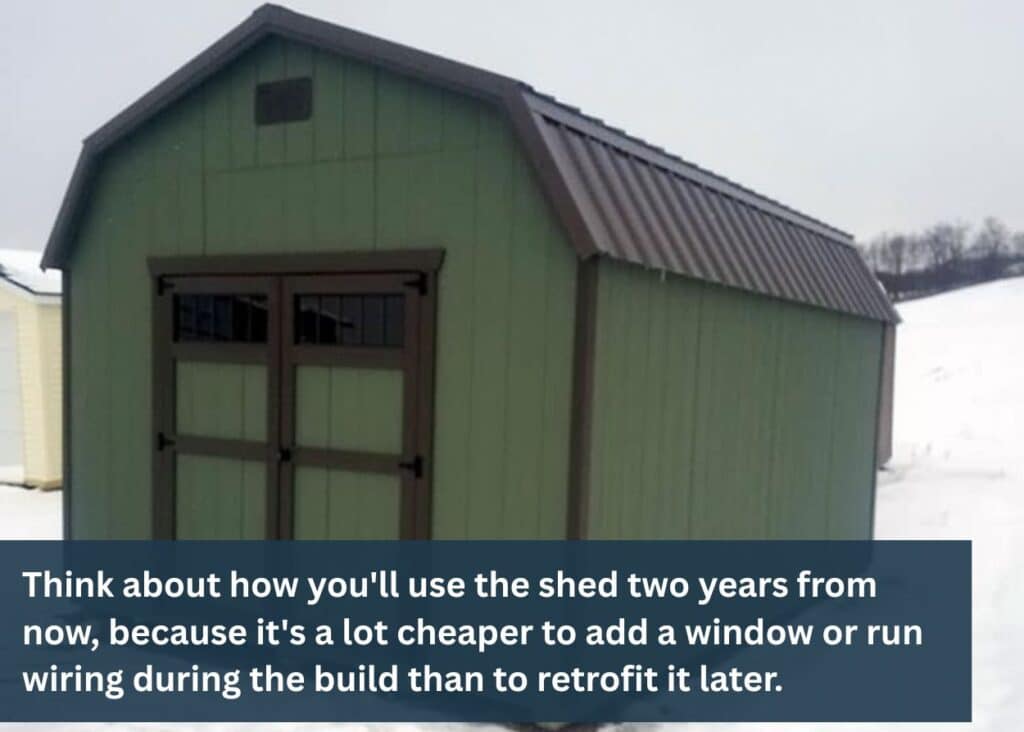
Think about how you'll use the shed two years from now, not just this weekend. It's a lot cheaper and easier to add a window or run wiring during the build than to retrofit it later.
10x16 vs. Other Shed Sizes
A 10x16 sits right in the middle of the lineup, which is a big part of its appeal. Here's how it compares against other common shed sizes:
|
Size |
Floor space |
Best for |
|
10x12 |
120 sq ft |
Basic storage, smaller yards |
|
10x16 |
160 sq ft |
Storage plus a workspace or hobby room |
|
12x16 |
192 sq ft |
Wider projects, parking, more elbow room |
|
12x24 |
288 sq ft |
Heavy equipment, full workshops |
At 10 feet wide, a 10x16 has plenty of width for storage along the walls and a clear walking lane down the center. But if you want to work on both sides of a project at the same time, or park a vehicle and still walk around it, a 12-foot width gives you more breathing room.
Not sure which way to lean? You can usually talk it through with your builder before you commit to anything. A good one will ask what you're storing and how you'll use the space, then point you to the right size.
Before You Buy: Site Prep, Permits, and Cost
There’s a temptation to skip this step. After all, couldn’t you just plop the shed down on an empty spot in your yard? Sure, you can, but a little planning here saves you real money and real headaches down the road.
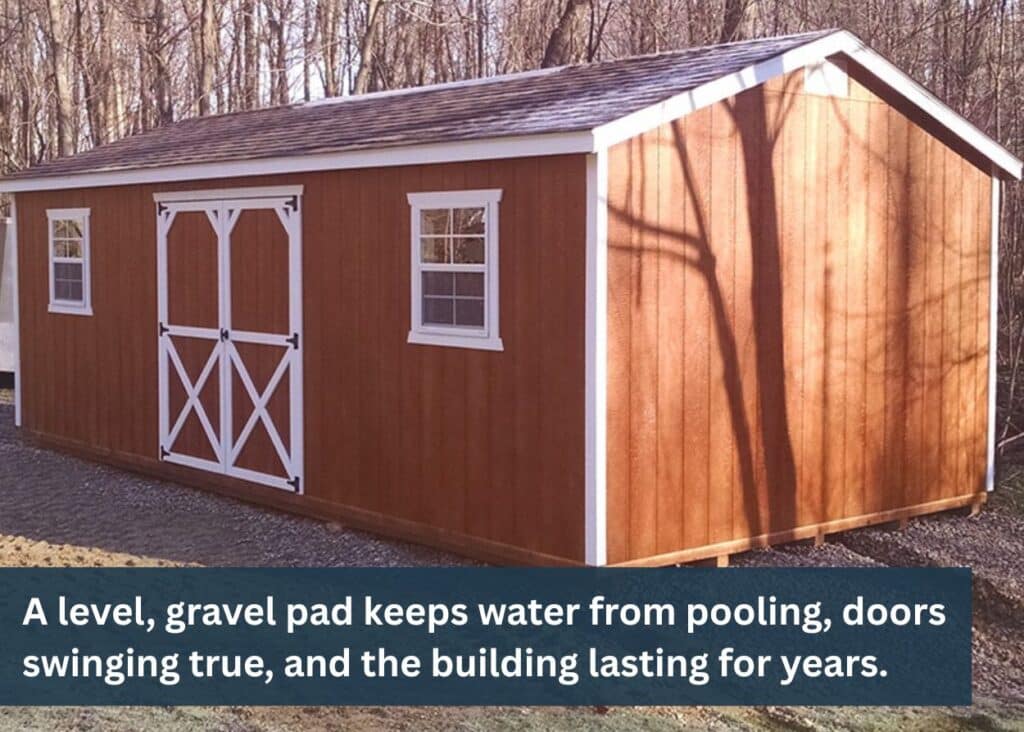
Site prep: Your shed needs a flat, solid base to sit on. For most backyard sheds, the gold standard is a gravel pad consisting of washed 2B limestone, about 3 to 4 inches deep, and laid over landscaping fabric. A level pad keeps water from pooling under the floor, keeps the doors swinging true, and helps the building last for years. If you skip the pad, you risk a shed that settles, leans, or starts to rot early. Most builders, including us, ask the customer to handle site prep before delivery, so it's smart to plan this step first.
Permits and HOAs: Under the Pennsylvania Uniform Construction Code, detached sheds under 1,000 square feet that aren't attached to your home generally do not need a state building permit. A 10x16 is only 160 square feet, so you're well under that line.
But even without building permits, your township can still require a zoning permit, which sets how far the shed must sit from your property lines, and even lower that size threshold on its own. For example, the City of Meadville, PA, asks for a zoning permit any time you put up an accessory structure like a shed. Adding electrical wiring can trigger a separate permit, too. So before you build, call your local township or borough office to find out. It takes about 10 minutes and saves you from a stop-work order or a fine later.
Same with the HOA. Most HOAs allow sheds, but there may be restrictions on size or aesthetics. Do yourself a favor and talk to them after you’ve talked to your township. Dealing with the HOA after you’ve put that shed in can be a headache.
What drives the cost: The price of a 10x16 shed comes down to a handful of choices:
- Wood siding vs vinyl
- Shingle roof vs metal roof
- Add-ons like windows, lofts, ramps, shelving, and electrical
- How far does the shed have to travel to reach your property
- Whether you pay cash or go the rent-to-own route
Rent-to-own is worth a look if you'd rather not pay everything up front. Many builders offer it with no credit check, putting a quality, long-lasting shed within reach for many more homeowners.
The Bottom Line
A 10x16 shed hits a sweet spot. It’s big enough for storage and a project, yet small enough to fit most yards, and flexible enough to adapt to different roles as your needs change. For a whole lot of homeowners, it's the size that just makes sense.
If you're in Northwestern Pennsylvania and weighing your options, we'd love to help. At Weaver Barns, we're a family-run shop. Chris and Matt Weaver still handle deliveries themselves, so your building shows up on time and gets placed with care. We build with house-grade materials, the same LP SmartSide siding, Owens Corning shingles, and Sherwin-Williams paint you'd want on your own home, so your shed adds value to your property instead of looking like an afterthought. You can choose shingle or metal roofing at the same price, build custom or buy off our lot, and we deliver free within 25 miles.
Contact us today, and we'll help you figure out the right size for your yard, no pressure.
